Document
Sec 1 History & Regulations
LHAP 302B-61-40681 (FA25) - Landscape Irrigation/Course/Introduction to Irrigation/Sec 1 History & Regulations.docx
Download File
This resource is available as an original file download.
Extracted Document Text
Extracted from the original source file.
History of Irrigation
Over 70% of the earth is covered with water, but most of it cannot support human life. Most of the water is trapped in oceans (saltwater), frozen glaciers, polar ice caps, or is deep underground.
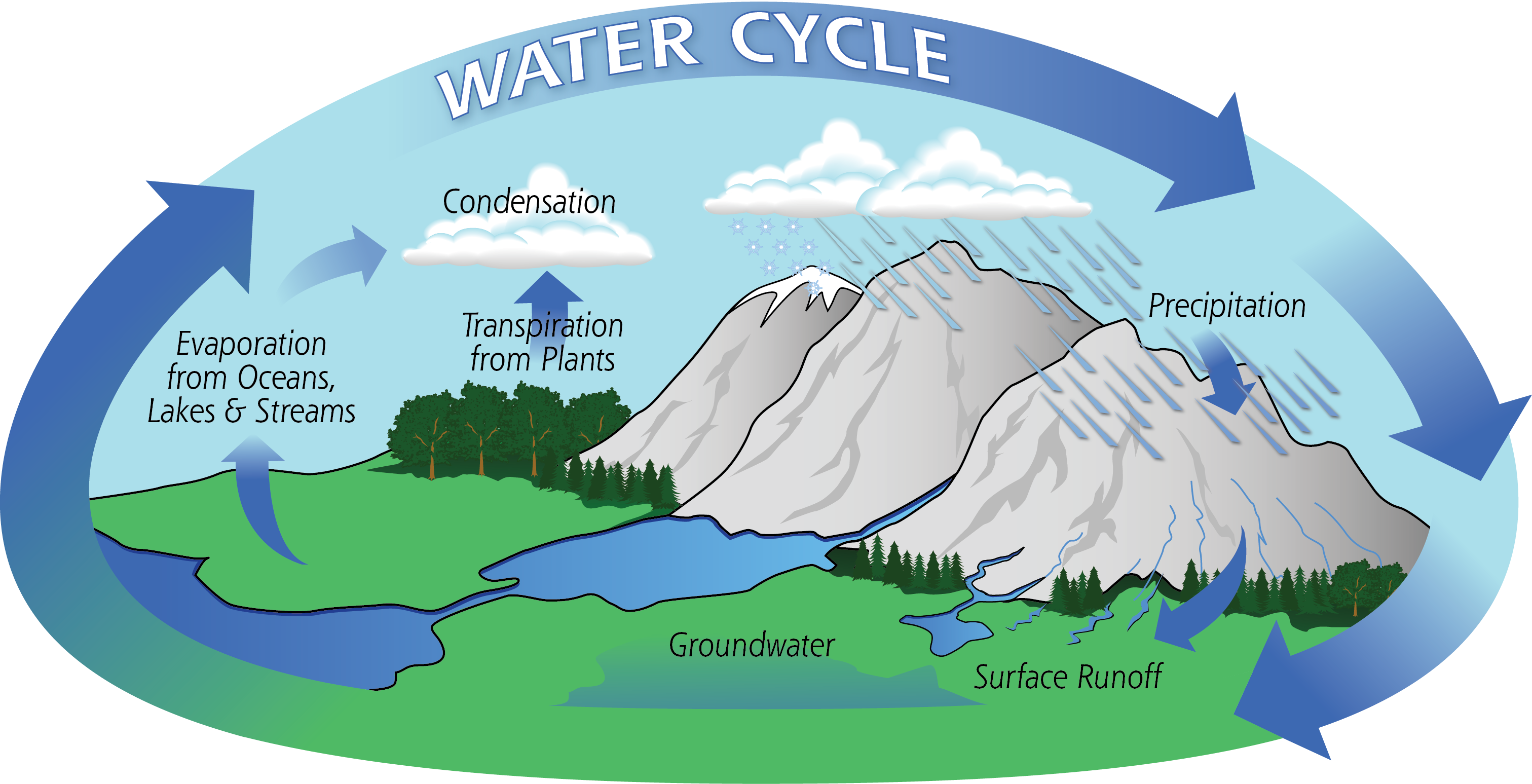
The most important water processor is the sun. It heats the ocean [and contributes to evapotranspiration] forming water vapor that rises, cools, and is distributed as rain or snow. “Plants play a significant role (in the water cycle) releasing approximately 10% of the water back into the environment.”
https://www.slideshare.net/DHewison/plant-transpiration
With an increase in demand for our freshwater resources our ability to manage this resource is being taxed.
Credits: NASA GSFC
https://pmm.nasa.gov/education/sites/default/files/article_images/Water-Cycle-Art2A.png
Canada has less than 1% of the world’s population and 20% of the world’s freshwater resource. Annually Canada’s rivers discharge 7% of the world’s renewable water supply – 105,000 cubic meters per second.1 We share the Great Lakes with the United States and possess some of the largest river systems in the world.
1. http://albertawater.com/interesting-facts/canadaWater in Alberta
Two primary water basins in our province contain virtually all of our water supplies. The Mackenzie River system includes the Peace, Athabasca and Pembina Rivers. This system discharges most of the water leaving Alberta into the Arctic Ocean.
The Saskatchewan/Nelson system includes the North Saskatchewan, the Red Deer, the Bow, the Oldman, the Belly and the St. Mary’s rivers. Although these rivers cover 35% of Alberta’s land area, they discharge only 13% of our water. This 35% of the province's land mass envelopes the most productive agricultural land in Alberta and contains 90% of Alberta’s population. Half of the water in this system must be allowed to flow to Saskatchewan (interprovincial agreement)
Floods are a common problem in Northern Alberta where there is often a surplus of water while Southern Alberta is often under drought conditions. This scarcity was documented as far back as 1857 when Captain John Palliser led an expedition through the area.
The southern portion of the province has more growing degree days than any agricultural area in Canada, but it also has less precipitation. It benefits from rivers that originate from snow melt on the eastern slopes of the Rocky Mountains. The challenge is to catch this water during high runoff periods and store it for future recreational, agricultural, manufacturing and municipal supplies.
Water is being realized as a non- renewable resource. The availability and management of freshwater is becoming one of the greatest environmental, social, and political challenges of the 21st century.” Canada’s Commissioner of the Environment and Sustainable Development, 2001.
Irrigation
Irrigation is defined by Merriam Dictionary as “the watering of land by artificial means to foster plant growth.” People have been artificially watering the land by diverting water since about 6000 BC.1
The first record of agricultural irrigation in Canada was in 1879 on Fish Creek, South of Calgary. Mormons from Utah arrived in Alberta and developed the basis for the southern systems in 1889.
Sprinklers were first introduced in Rome with municipal water systems. They
were used in gardens to transport water to areas where rainwater was insufficient. Most were gravity fed. In the late 1800 a pressurized sprinkler was introduced that used steam instead of water to propel the head.
1. http://www.irrigationmuseum.org/exhibit2.aspx
The first water pressurized sprinkler US patent was granted to J. Lester of Buffalo New York in 1871.
Many sprinkler designs were patented in the late 1800 and early 1900’s, constantly changing and improving on existing systems. (irrigation museum.org)Today our greater awareness of water conservation has continued to create more efficient technology and better irrigation design and practices.
Types of Irrigation Systems
Some of the systems used throughout history, such as furrows and canals, are still being used today in some parts of the world . Types of agricultural irrigation systems include:
1. Surface irrigation
Flood or basin
Furrow
2. Micro-irrigation
Drip tape
Emitters
3. Sprinkler Irrigation
Hand moves
Wheel move
Center Pivot
Turf and Landscape Systems include:
1. Sprinklers
Valve in Head (large areas like golf courses)
Rotors
Spray heads
quick coupler systems
2. Microsystems
Micro sprays
Drip systems
Bubblers
Resources
Dennis McKernan Lifework Inc. Olds Alberta
notes adapted from Eastern irrigation District Presentation
http://www.summerrainsprinklers.com/blog/history-of-the-lawn-sprinkler-systems/
http://www.gardenguides.com/135481-history-sprinkler-systems.html
http://www.irrigationmuseum.org/exhibit2.aspx
http://albertawater.com/interesting-facts/canada
https://pmm.nasa.gov/education/sites/default/files/article_images/Water-Cycle-Art2A.png
https://www.slideshare.net/DHewison/plant-transpiration
Links Found
URLs discovered in the source file.
- http://www.summerrainsprinklers.com/blog/history-of-the-lawn-sprinkler-systems/
- http://www.irrigationmuseum.org/exhibit2.aspx
- http://www.gardenguides.com/135481-history-sprinkler-systems.html
- http://albertawater.com/interesting-facts/canada
- https://pmm.nasa.gov/education/sites/default/files/article_images/Water-Cycle-Art2A.png
- https://www.slideshare.net/DHewison/plant-transpiration
Extracted Media
Images and media extracted from the source document.
